
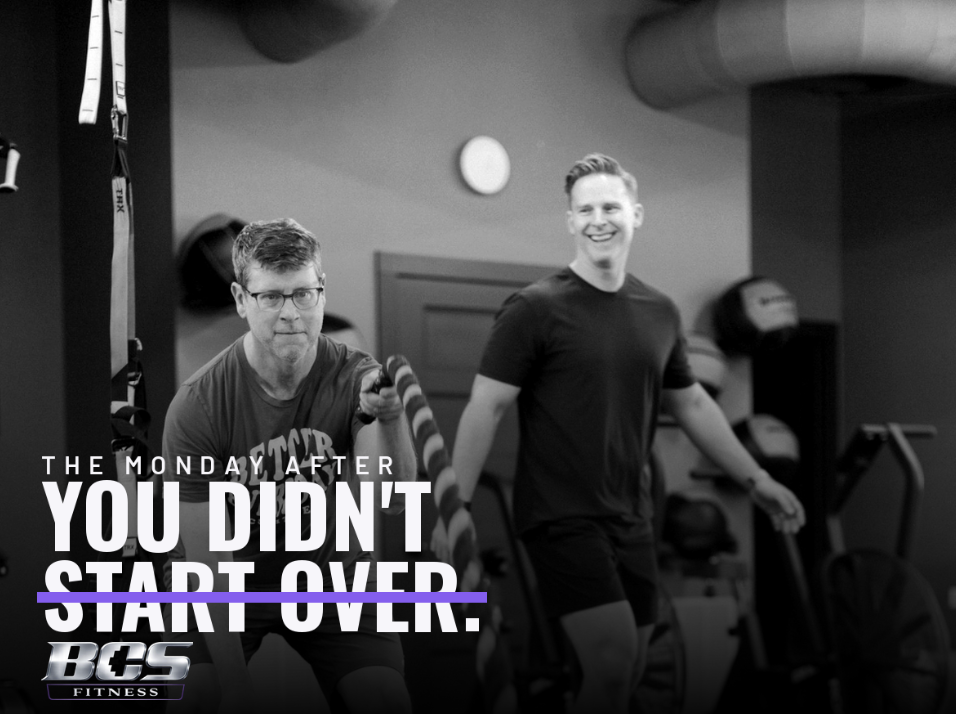
How to Get Back Into Your Workout Routine After a Vacation (Without Starting Over)
Short answer: You don't need to start over. A few days — even a week or two — away from training doesn't erase months of consistency. The fastest way back is to resume, not restart: put one easy session on the calendar this week, go lighter than your ego wants, and let your normal rhythm rebuild from there.
Every holiday and every vacation, we hear the same thing when people walk back through our doors: "I ate terrible." "I didn't move all week." "I undid everything."
You didn't. And the belief that you did is the only thing standing between you and your next good workout. Here's what's actually true about taking time off — and exactly how to get back on track, especially if you're 40 or older.
Did I really lose all my progress over vacation?
No. A short break does not undo months of training. Meaningful losses in strength and muscle generally take around three or more weeks of complete inactivity to show up — and even then, what you lose comes back quickly thanks to "muscle memory." A long weekend or a one-week trip barely registers. In many cases, a few days of rest actually helps: your joints settle, small aches calm down, and you come back fresher.
The real damage over a holiday is rarely physical. It's the story you tell yourself about the holiday — the guilt that talks you into skipping Monday, then Tuesday, then the rest of the week. That mental spiral undoes far more progress than any plate of food ever could.
Why "starting over" is the wrong mindset
"Starting over" is an all-or-nothing trap. It assumes you were at zero, when in reality you're picking up a thread you never actually dropped. People who hit reset every Monday tend to stay stuck in the same loop for years. People who simply continue — who treat a week off as a few days inside a much longer story — are the ones still training, and still getting stronger, five years later.
The goal after time off isn't to punish yourself back into shape. It's to lower the barrier so much that showing up feels easy. One session breaks the spell.
How to get back into your routine after time off
Here's the simple, no-drama way to restart after a vacation or holiday:
Schedule one session this week — and just show up. Don't plan a heroic comeback. Book a single workout, put it on the calendar, and let the only goal be attendance. Momentum restarts the moment you walk in.
Go lighter on day one. Leave the ego at the door. A smooth, moderate first session tells your body "we're back" without leaving you so sore you dread the next one. You'll be back to full effort within a session or two.
Rebuild your normal schedule — don't overhaul it. Resist the urge to launch an aggressive new program to "make up" for the break. Return to the routine that was already working. Consistency beats intensity every time.
Get your basics back to baseline. Sleep, water, and protein do the quiet heavy lifting. Get to bed near your normal time, hydrate, and eat like you did before the trip. Everything else gets easier.
Use accountability to turn day one into week three. The hardest part of coming back isn't the workout — it's the decision to go. A coach or training partner expecting you is what turns a single session into a re-established habit.
How long does it take to get back to where you were?
Usually far less time than people fear. If you were off for a few days to a week, you'll likely feel normal again within one or two sessions. If you were away longer, give it a couple of weeks of steady training to feel fully back. Because your body "remembers" the work you'd already put in, regaining lost ground is much faster than building it the first time.
Should adults over 40, 50, or 60 restart differently?
Slightly — and it's worth doing right. As we age, a smart return matters more, not less. The principles are the same (resume gently, prioritize form, rebuild gradually), but the stakes are higher: maintaining muscle and strength protects your bone density, balance, metabolism, and independence for decades to come. That's exactly why we don't throw anyone back into a punishing workout. A brief, well-coached ramp back in is safer and, frankly, more effective than trying to prove something on your first day.
If you're returning after a longer layoff or you're managing joints, past injuries, or specific goals, this is where a coach earns their keep — meeting you at your real starting point instead of a generic one.
The easiest way to get back on track in College Station & Bryan
At BCS Fitness, we've coached busy adults 40+ across College Station and Bryan since 2003. Our approach is prescriptive, coach-led personal training — private 1-on-1 and small groups — built around your body, your history, and your goals. No intimidating big-box chaos, no one-size-fits-all program.
If the holiday knocked you out of rhythm, we'll help you pick right back up. Your first step is a simple 1-on-1 session where we map where you are and where you want to go.
Ready to get back to it? Call or text us at 979-575-7871 to book your first session.
Frequently Asked Questions
Will one week off ruin my fitness progress? No. One week off does not ruin your progress. Noticeable losses in strength and muscle typically take about three or more weeks of complete inactivity, and anything lost in a short break returns quickly once you resume training.
How soon should I work out after a vacation? Aim to get one session in within the first few days back. You don't need to wait until you feel "ready" or motivated — scheduling a single, moderate workout is the fastest way to restart your routine.
Should I do a hard workout my first day back? No. Keep your first session lighter and focus on smooth movement and good form. A moderate return prevents excessive soreness and makes it far more likely you'll come back for the next one.
How do I stay consistent after the holidays? Return to the schedule that already worked instead of building a brand-new program, get your sleep and nutrition back to baseline, and use accountability — a coach or training partner — to turn your first session back into a re-established habit.
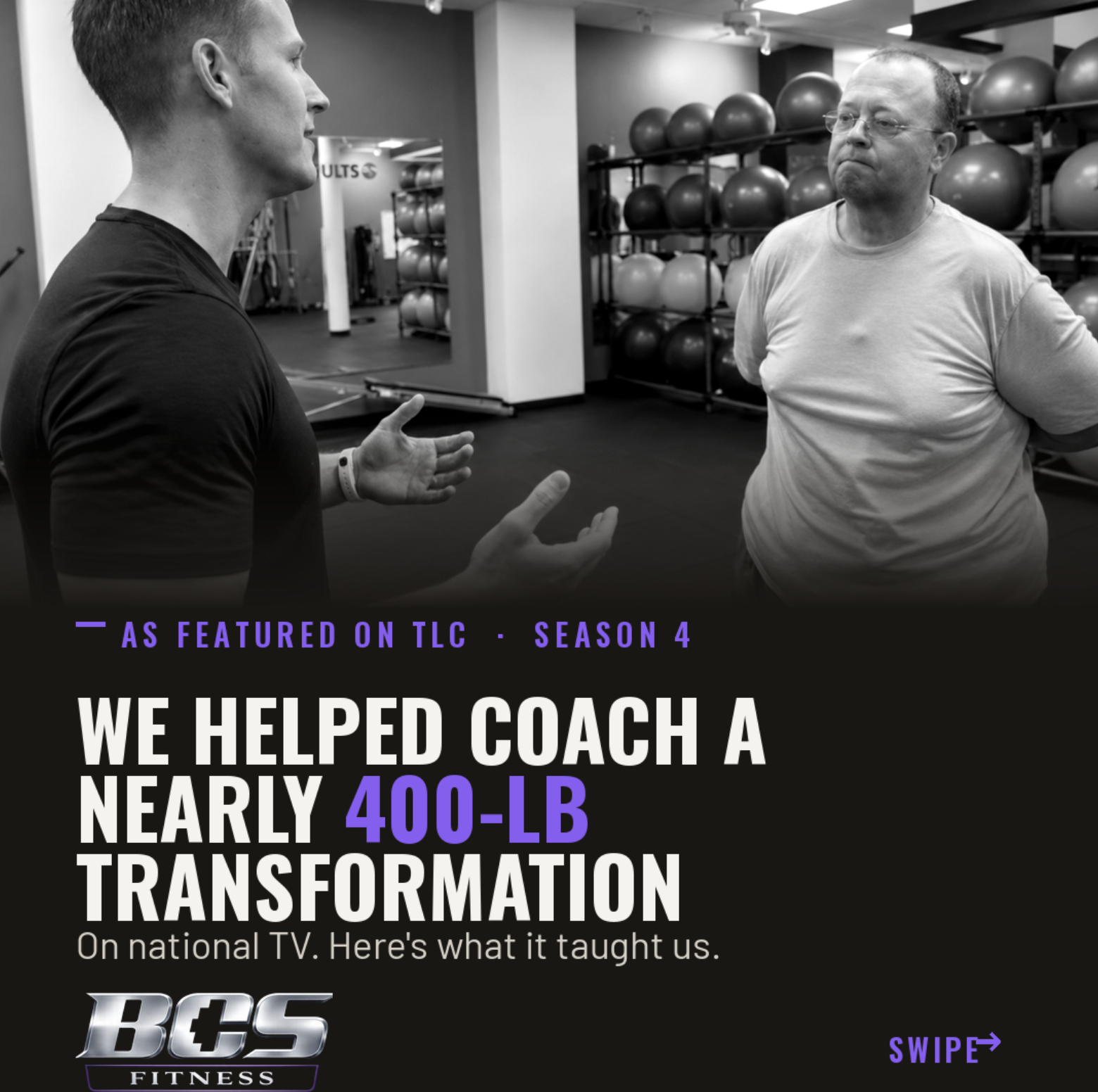
It's Never Too Late to Get Strong: What Coaching a 400-Pound Transformation Taught Me
By Brad Tillery, Owner & Head Coach, BCS Fitness — College Station & Bryan, TX As featured on TLC's "My 600-lb Life" (Season 4)
On Season 4 of TLC's My 600-lb Life, I was Chad Dean's trainer. When we started, Chad weighed close to 600 pounds. Over the journey that followed, he lost nearly 400 of them.
I had a front-row seat to one of the hardest, most honest transformations a person can attempt — on national television, with no shortcuts and nowhere to hide. More than twenty years of coaching busy adults here in the Brazos Valley had taught me plenty. Working with Chad taught me the lessons I now bring to every single person who walks into our studio.
Here's what that experience confirmed — and why it shapes how we coach at BCS Fitness to this day.
Key takeaways
It is never too late to get strong. I watched a man rebuild his body and his life from the hardest possible starting point. Your starting line is not too far back.
There are no quick fixes. Even medical tools like GLP-1 medications and bariatric surgery still require the work — they come with real costs and trade-offs, not a free pass.
Muscle is the foundation. Lasting results come from building muscle, eating enough protein and fiber, and keeping habits you can actually sustain.
Consistency beats intensity. Showing up steadily, week after week, beats occasional heroic effort every time.
Coaching matters most for beginners. The right guidance keeps you safe, accountable, and moving in the right direction from day one.
Is it ever too late to get in shape?
No. And I don't say that as a slogan — I say it because I've watched it proven from the most extreme starting point imaginable.
When Chad began, plenty of people assumed his window had closed. It hadn't. The human body responds to training at every age and nearly every condition. Strength, balance, and mobility can be rebuilt in your 40s, 50s, 60s, and well beyond.
The members we coach are usually not starting at 600 pounds. They're busy adults who haven't trained in years, who feel like they've "missed their chance," or who are nervous about getting hurt. To every one of them, the answer is the same: it is not too late. It is rarely as late as you think.
Do you need surgery or weight-loss drugs to get results?
This is the question I hear most in 2026, and I'll give you the honest answer: those tools can help some people, but they are not a shortcut around the work.
GLP-1 medications and bariatric surgery can be legitimate parts of a medical plan for the right person, under a doctor's care. But they come at a cost — financial, physical, and otherwise — and they don't build strength or healthy habits on their own. Chad's journey made that crystal clear. There is no version of lasting change that skips the effort.
If you lose weight without building muscle and learning sustainable habits, the results rarely hold. Which brings us to the part most people skip.
Why muscle matters more than the number on the scale
Muscle is the engine of a healthy metabolism. When you build and keep muscle, your body burns more energy at rest, you move better, and you protect yourself against the falls, frailty, and loss of independence that come with age.
That's why we don't chase the scale. We build strength, and we pair it with the basics that make results stick:
Enough protein to build and preserve muscle.
Enough fiber and whole foods to support digestion and steady energy.
Habits you can keep — not a punishing 30-day sprint you abandon in February.
Do that, and the weight takes care of itself. Skip it, and the weight comes back.
Consistency beats intensity
Chad didn't transform with a handful of brutal, all-out workouts. He won by showing up — again, and again, and again, on the good days and the hard ones.
This is the most freeing truth in fitness, especially if you're a beginner: you do not need to destroy yourself in the gym. You need to show up consistently and let small wins compound. A sustainable routine you actually follow will always beat a perfect plan you quit.
How we coach at BCS Fitness
We've been coaching busy adults in College Station and Bryan since 2003, and the principles never change — whether the goal is a 400-pound transformation or simply getting strong enough to keep up with the grandkids.
Our approach is:
Prescriptive and coach-led. Every program is built for the individual, run by a certified coach who watches your form every rep.
Judgment-free. We meet you exactly where you are. No intimidation, no comparison, no big-box-gym chaos.
Small and personal. We coach in small groups and private one-on-one sessions, never crowded classes.
Built for real life. Sessions designed to fit a busy adult's schedule, with results that show up outside the gym.
We have two studios — South in College Station and Central in Bryan — and we'd be glad to help you find your starting line.
Frequently asked questions
Is it too late to start strength training at 50 or 60? No. Adults can build strength, muscle, and mobility well into their 60s, 70s, and beyond. Strength training is one of the most valuable things you can do for long-term health, balance, and independence as you age.
Are GLP-1 drugs or surgery enough on their own for lasting weight loss? For most people, no. These tools can support a medical weight-loss plan under a doctor's guidance, but they don't build muscle or sustainable habits by themselves. Lasting results still require strength training, adequate protein, and consistent routines.
Do I need to already be fit to start training at BCS Fitness? Not at all. Most of our members start as beginners or are returning after years away. Every new client begins with a one-on-one session so we can learn your history, goals, and any limitations before building your plan.
Where is BCS Fitness located? We have two studios: South at 3032 Barron Rd, Suite 100, College Station, TX 77845, and Central at 4301 Texas Ave, Suite 100, Bryan, TX 77802.
Ready when you are
If you've ever told yourself it's too late, I hope Chad's story changes your mind. I've seen what's possible from the hardest starting line there is — whatever yours looks like, you can take a first step.
When you're ready, we're here. You can reach us at 979-575-7871 or visit bcsfitness.com to start a conversation. No pressure — just a real plan, built around you.
About the author
Brad Tillery is the owner and head coach of BCS Fitness, a boutique strength and personal-training studio serving College Station and Bryan, Texas since 2003. He appeared on TLC's My 600-lb Life (Season 4) as the trainer for Chad Dean, who lost nearly 400 pounds. Brad and his team specialize in prescriptive, coach-led training for busy adults 40 and over.
BCS Fitness South Studio: 3032 Barron Rd, Suite 100, College Station, TX 77845 Central Studio: 4301 Texas Ave, Suite 100, Bryan, TX 77802 Phone: 979-575-7871 · Web: bcsfitness.com
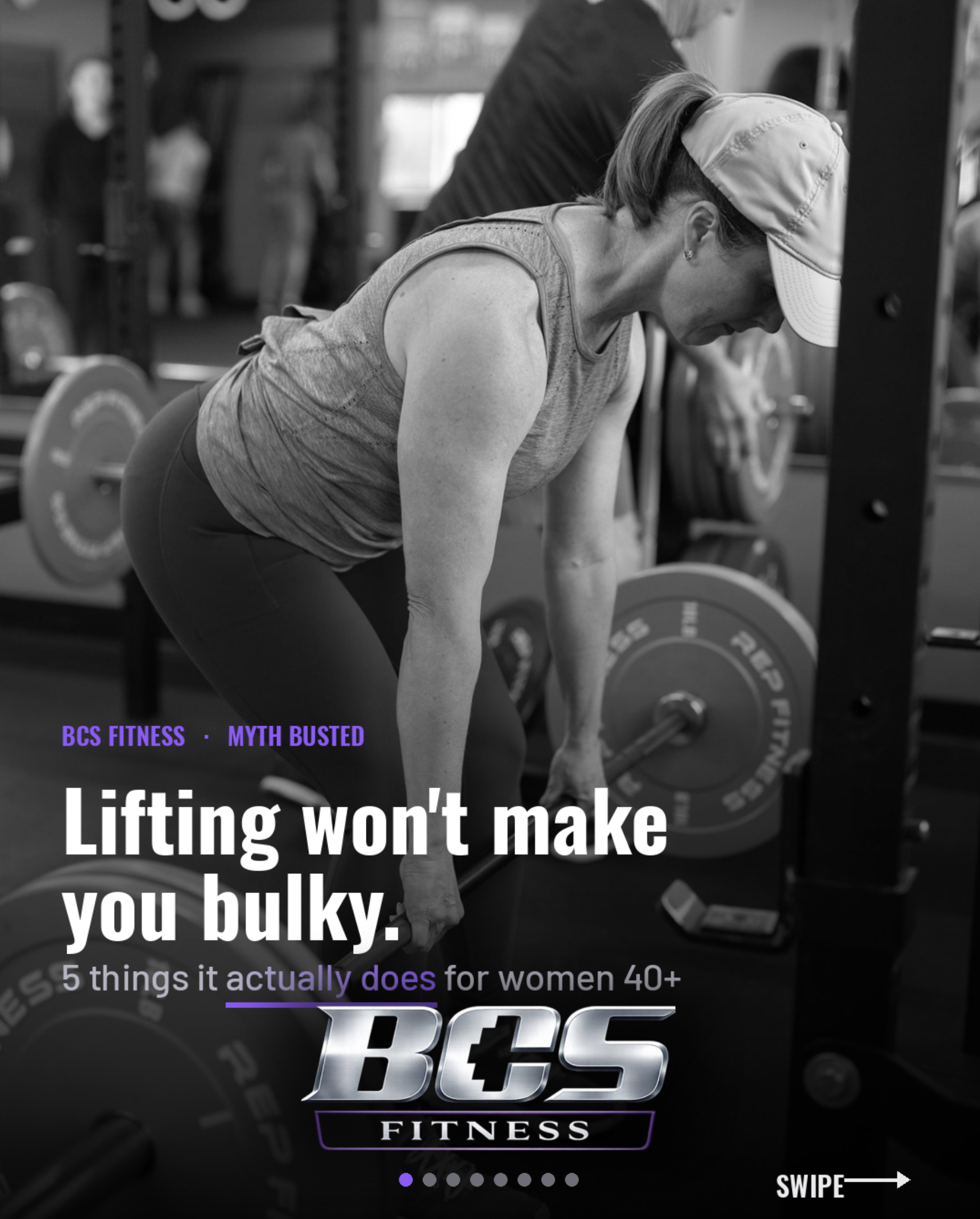
Will Lifting Weights Make Women Over 40 "Bulky"? (An Honest Answer)
If you've ever skipped the weights and headed straight for the treadmill because you didn't want to "get bulky," you are far from alone. It's the single most common reason women avoid strength training — and it's one of the most persistent myths in fitness.
Here's the short answer: No. Lifting weights will not make you bulky. For the vast majority of women — especially women over 40 — strength training does the opposite of what the myth claims. It makes you leaner, stronger, and more capable, and it protects the very things that get harder to hold onto as we age.
Let's walk through why.
Where the "bulky" fear comes from
The fear usually traces back to images of competitive bodybuilders and the assumption that picking up a dumbbell puts you on a fast track to looking like one. What that picture leaves out is just how much deliberate work — years of high-volume training, precise nutrition, and in many cases a genetic predisposition — goes into building that kind of size.
"Bulky" doesn't sneak up on you after a few weeks of strength training. It's the result of a goal pursued on purpose, over a long time. If that's not your goal, you're not going to stumble into it by accident.
Why women don't bulk up the way the myth suggests
1. The hormones aren't there for it
Building large amounts of muscle mass leans heavily on testosterone, and women carry only a fraction of what men do — often 10 to 15 times less. That hormonal difference is a big reason women can train hard, get noticeably stronger, and still not add the bulk the myth warns about. You get the strength and the shape without the size.
2. Muscle makes you smaller, not bigger
This is the part that surprises people most: muscle is denser than fat. Pound for pound, it takes up less room on your body. So when you build muscle and lose fat, the result is a leaner, firmer, more compact silhouette — not a bigger one.
That "toned" look so many people are actually after? That is muscle. You can't tone something you haven't built. Strength training is how you get there.
3. It's one of the best things you can do for your bones
For women over 40 — and especially through and after menopause — bone density becomes a real concern as estrogen declines and bone loss accelerates. Resistance training is one of the most effective, well-supported ways to build and maintain bone density, lowering the risk of fractures down the road. Backing away from the weights here is often exactly the wrong move.
4. It turns your metabolism back up
Muscle is more metabolically active than fat, meaning it burns more calories even while you're at rest. The more lean muscle you carry, the more your body works for you around the clock — which makes maintaining a healthy weight more sustainable as you age, instead of an uphill battle.
5. It's how you stay strong for life
Strength isn't about the mirror. It's about carrying groceries in one trip, catching your balance before a stumble becomes a fall, getting up off the floor with ease, and staying independent for decades. The strength you build in your 40s, 50s, and 60s is some of the most valuable work you can do for your future self.
"But I still don't want to look like a bodybuilder"
You won't — not without setting out to, deliberately, for years. What you will notice, usually within the first month or two, is feeling stronger, moving better, and seeing your clothes fit differently. The version of "strong" that comes from smart, consistent strength training looks like a healthy, capable, confident woman. It does not look like a competition stage.
The real risk isn't lifting too much. For most women over 40, the real risk is lifting too little — and missing out on the muscle, bone, and metabolic benefits that matter most in this stage of life.
What this looks like at BCS Fitness
We've been coaching busy adults 40+ in College Station and Bryan since 2003, and we hear the "bulky" worry all the time — usually right before someone discovers how much they actually enjoy getting strong.
Here's how we make it work:
You start one-on-one. Before you ever step onto the training floor, we sit down to learn your goals, your history, and anything we need to be mindful of.
Everything is prescriptive. No copy-paste templates and no one-size-fits-all programming. Your plan is built specifically for your body and your goals.
You're coached, not crowded. Our small-group training keeps the groups tiny, so your form gets watched and your questions get answered every single session.
The goal is simple: help you get stronger safely, confidently, and in a way that fits your real life.
Frequently asked questions
Will I get bulky if I lift heavy? No. Lifting challenging weights builds strength and a leaner shape — actual "bulk" requires years of deliberate, high-volume training plus specific nutrition that won't happen by accident.
Is it safe to start strength training in my 50s or 60s? Yes — and it's one of the best things you can do at this age. With proper coaching, strength training builds bone, protects joints, and lowers fall risk. The key is starting at the right level with someone watching your form.
How soon will I see results? Many people feel stronger and notice their clothes fitting better within the first month, with steady changes building from there.
Do I need to already be fit to start? Not at all. Total beginners are exactly who we love coaching. We meet you where you are.
Ready to get strong (not "bulky")?
If the "bulky" myth has been keeping you off the weights, let's change that. Start with a free, no-pressure Jump Start Session — a relaxed, one-on-one sit-down where we learn about you, map out a plan, and walk you through a few movements so you know exactly what to expect.
📞 Call or text us at 979-575-7871, or reach out through bcsfitness.com to book your session.
BCS Fitness — coaching busy adults 40+ to move and feel better, since 2003. 📍 South: 3032 Barron Rd, College Station · Central: 4301 Texas Ave, Bryan
Strength Training After 40 in Bryan, TX: A Local Guide to Getting Started
Short answer: If you're over 40 in Bryan, Texas and thinking about strength training, the best way to start is with coached, prescriptive training built around your body — not a one-size-fits-all program you're left to figure out alone. Look for a studio that assesses you first, coaches every rep, and has a real track record with adults your age. BCS Fitness has done exactly that across Bryan–College Station since 2003, including our Central studio on Texas Avenue in Bryan.
If you've been telling yourself "I should really start lifting weights" but haven't pulled the trigger, you're not behind — you're right on time. Here's what adults 40+ in the Brazos Valley should know before they start, how to choose the right coach, and how to take the first step this week.
Why strength training matters more after 40
Starting around age 30, adults naturally lose roughly 3–8% of their muscle mass per decade — and that loss tends to speed up after 60 if nothing is done about it. That gradual decline (called sarcopenia) is behind a lot of what people chalk up to "just getting older": lower energy, a slower metabolism, weaker bones, worse balance, and losing the strength to do everyday things easily.
Here's the encouraging part: muscle responds to training at every age. Strength training is one of the most effective things an adult over 40 can do to protect bone density, keep metabolism up, improve balance and stability, and stay independent for decades. The CDC recommends muscle-strengthening activity at least two days a week for adults — and for most people 40 and up, that's the single highest-return habit they can build.
You don't need to already be fit to begin. Getting stronger is the process.
Is it safe to start strength training after 40 if you've been inactive?
For most people, yes — when you start the right way. The risk isn't strength training itself; it's jumping into something random, too heavy, with bad form, and no one watching. That's true at any age, and it's especially true if you've got old injuries or aches you've been working around.
A good start looks like this: an honest assessment of where you are today, movements matched to your current ability, and a coach who corrects your form before it becomes a problem. If something genuinely needs your doctor's sign-off first, a quality coach will tell you that honestly rather than push you through it. Done that way, strength training is one of the safest and most rewarding things you can take up in your 40s, 50s, and beyond.
Should you train on your own or work with a coach?
Both can work — but they're not equal, especially for someone getting (re)started after 40.
Training on your own is free, but it comes with real pitfalls: guessing at form, plateauing because you don't know how to progress, getting hurt, or simply losing momentum after a few weeks. Most people who try to go it alone don't quit because they're lazy — they quit because they're unsure, and uncertainty kills consistency.
A coach removes the guesswork. You get a plan built for your body, someone watching every rep, and accountability that keeps you showing up. For adults over 40, that combination is usually the difference between a habit that sticks and one more false start.
The sweet spot for many people is small-group prescriptive coaching — close to the attention of one-on-one personal training, at a more accessible price, with the energy of training alongside a few others at a similar stage.
What to look for in a personal trainer or coach in Bryan, TX
Not all "personal training" is the same. If you're shopping for a coach in Bryan, here's what actually matters:
A real assessment first. If they hand you a generic program before they understand your body, history, and goals, keep looking.
Coaching on every rep — not just a plan. A printout isn't coaching. You want eyes on your movement.
Experience with adults 40+. Training a 25-year-old athlete and a 55-year-old returning to exercise are different jobs. Make sure they do yours well.
Small groups or one-on-one — not a crowded class. You want attention, not to disappear in a room of 30 people.
A clean, welcoming environment where beginners don't feel out of place.
Coaches who stick around. Low turnover means someone who actually knows you and your progress.
Accountability built in — a system for checking in when you miss, not just hoping you come back.
At our Central studio in Bryan, this is how BCS Fitness has coached since 2003: prescriptive training in small groups, with each person on a plan built for them, coached every step. We cap our coaches' groups intentionally so the training stays personal — that's the whole point.
How much does personal training cost in Bryan, TX?
It varies a lot by format. One-on-one personal training in the U.S. typically runs anywhere from about $40 to $100+ per session, while small-group and prescriptive models bring the per-session cost down while keeping much of the personal attention. Appointment-based coaching (where you have a set time on the calendar) also tends to keep people far more consistent than a month-to-month gym membership you have to talk yourself into using.
The better question than "what's the cheapest?" is "what's the best value for actually getting results and sticking with it?" If you'd like current rates for coaching at our Bryan studio, the fastest answer is a quick conversation — reach out and we'll walk you through what fits your goals and schedule.
How to get started this week in Bryan
You don't have to commit to a year, or even know what you're doing. The first step is just a conversation and an assessment — a chance to tell us where you are, what you want, and what's held you back, and for us to show you what a plan would look like.
BCS Fitness – Central Studio (Bryan) 4301 Texas Ave, Suite 100, Bryan, TX 77802 Call or text: 979-575-7871 Online: bcsfitness.com
If you've been waiting for the "right time" to get strong, this is it. Reach out this week and let's get you started.
Frequently asked questions
Do I need to be in shape before I start strength training? No. That's one of the most common myths that keeps people stuck. Getting stronger is the process itself — a good coach meets you exactly where you are today and builds from there.
I have old injuries or aches. Can I still train? In most cases, yes. It starts with an assessment so your coach understands what to work around and how to progress you safely. If anything needs a doctor's clearance first, a good coach will tell you honestly.
How often should adults over 40 strength train? The CDC recommends muscle-strengthening activity at least two days a week. For most adults 40+, two well-coached sessions a week is enough to see meaningful gains in strength, energy, and how you feel day to day.
Where is BCS Fitness located in Bryan? Our Central studio is at 4301 Texas Ave, Suite 100, Bryan, TX 77802. We've coached adults across Bryan–College Station since 2003.
How long until I see results? Many people feel more energy and better movement within a few weeks. Visible strength and body changes typically build over the following weeks and months — the key is consistency, which is exactly what coaching is designed to protect.
BCS Fitness has provided prescriptive, coach-led training for busy adults 40+ in Bryan–College Station since 2003. Coaching busy adults 40+ since 2003.